
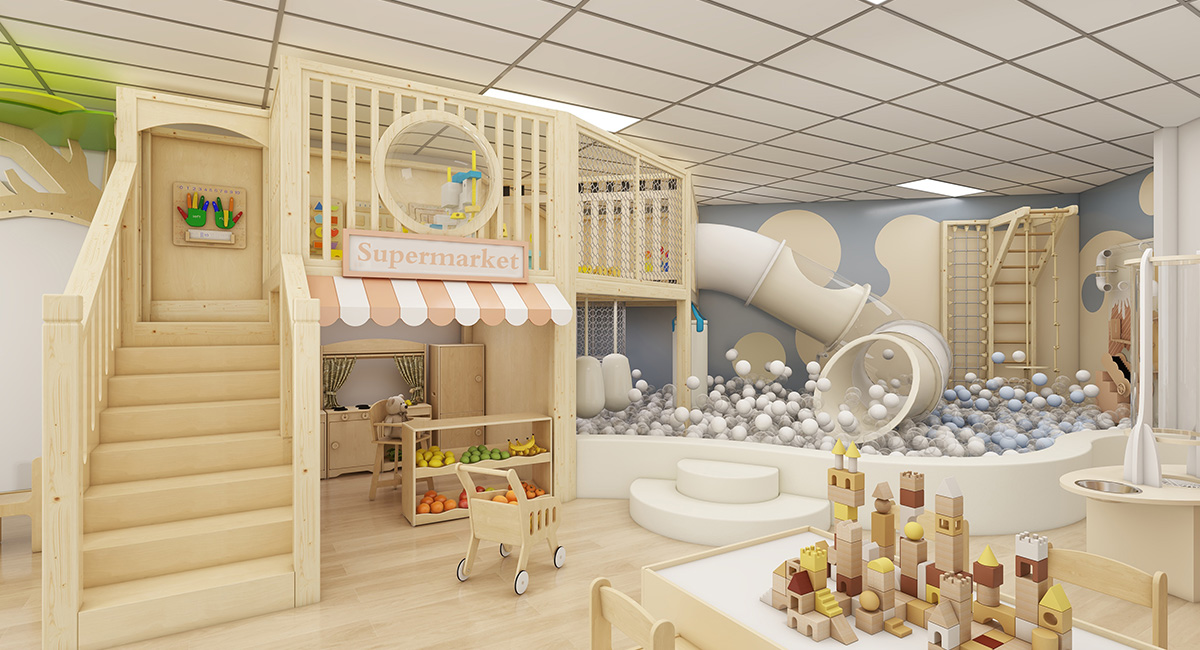
Kindergarten interior design needs to comprehensively consider children's physical and mental development characteristics, safety needs, play instinct,and educational functions. It should generally follow these core principles:
1. Safety Principle (First and foremost)
Material Safety: Choose environmentally friendly, non-toxic building materials and furniture without sharp edges (e.g., rounded corners). Soft flooring materials (e.g., vinyl flooring, cork) are recommended to prevent falls.
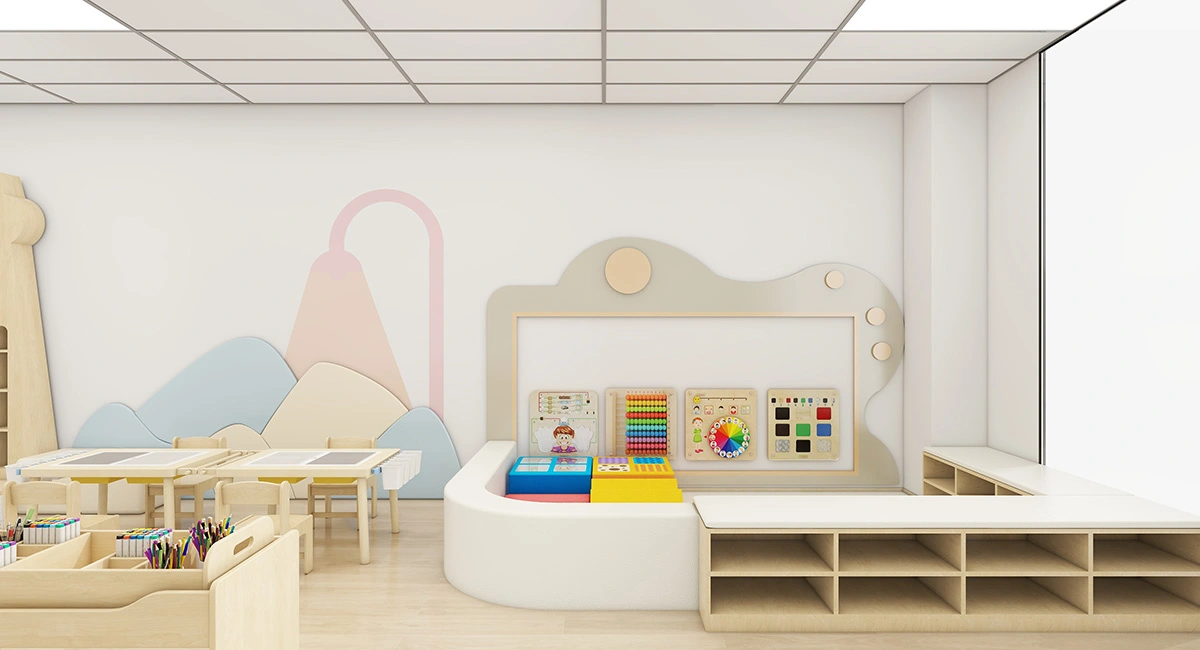
Structural Stability: Furniture and facilities must be securely fixed to avoid the risk of tipping over; power outlets should have protective covers, and doors and windows should have anti-pinch designs.
Hygiene and Easy Cleaning: Walls and floors should be washable to prevent bacterial growth.
2. Exploration and Fun
Themed Scenes: Utilize colors (e.g., predominantly soft warm tones with accent bright colors) and shapes (e.g., treehouses, castles) to stimulate imagination.
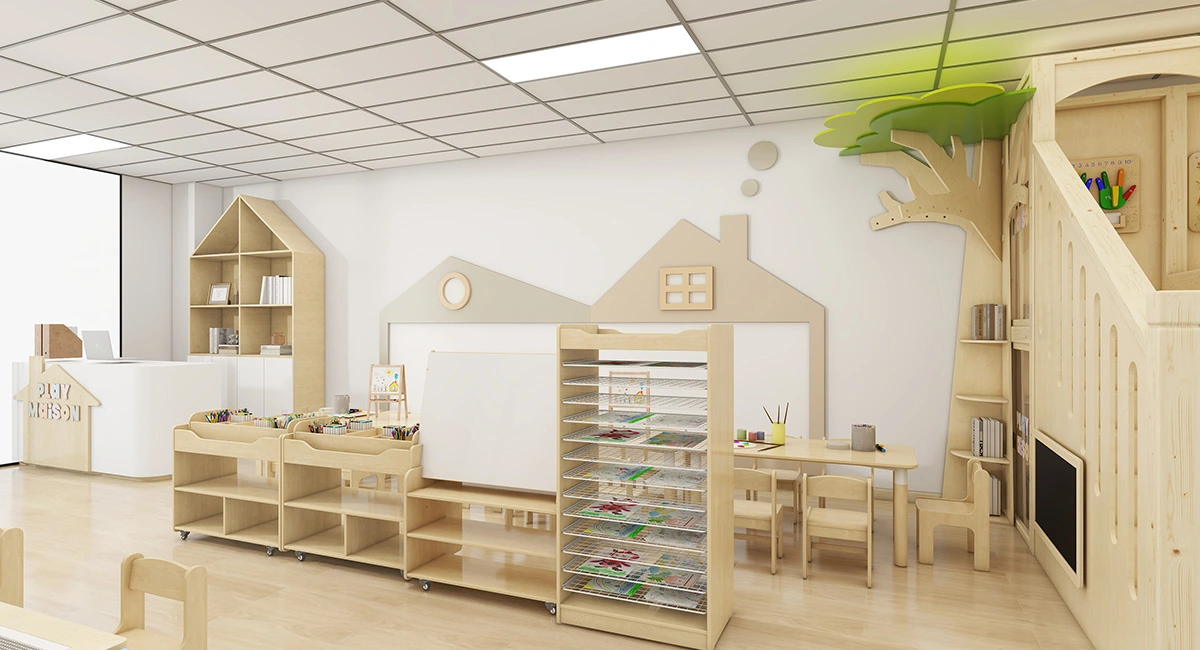
Versatile Spaces: Movable low cabinets and modular furniture facilitate the recombination of functional areas (e.g., transforming a reading corner into a performance area).
Sensory Stimulation: Design with different tactile textures (rough, smooth), lighting effects (soft natural light + localized warm light), and sound elements.
3. Play Area: Controllable risk, stimulating potential
Dynamic Physical Development Area: Mini climbing frames, tunnels, rocking horses.
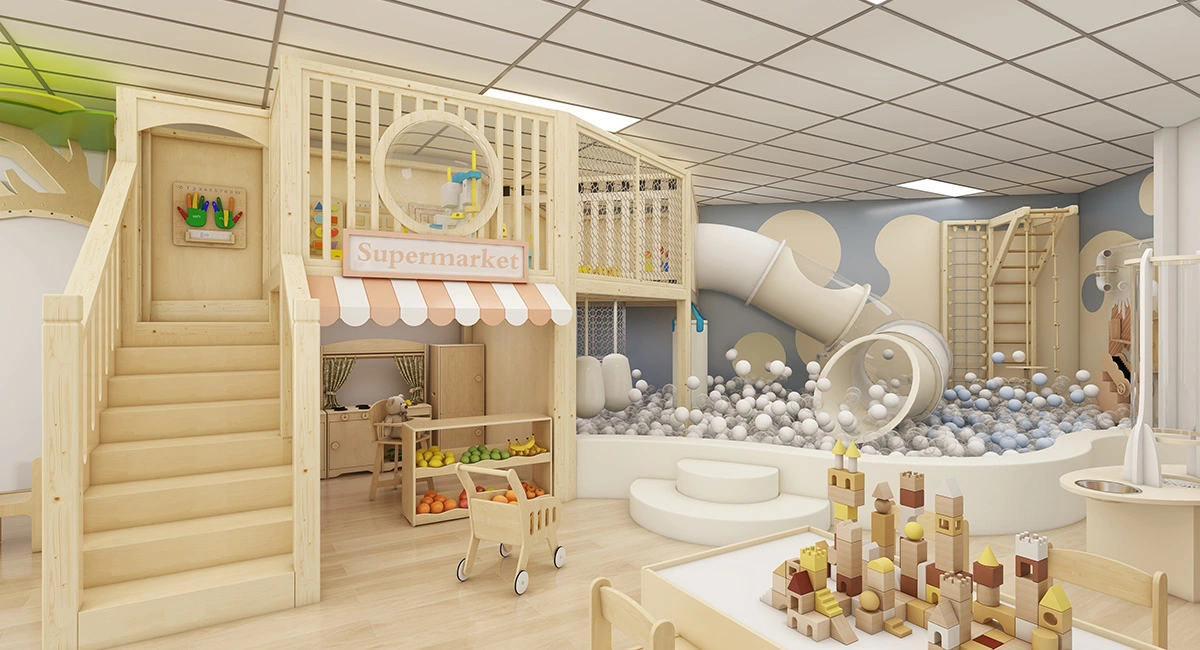
Role-Playing Area: Kitchen, supermarket, café.
Construction Play Area: Large soft building blocks, magnetic tile walls.
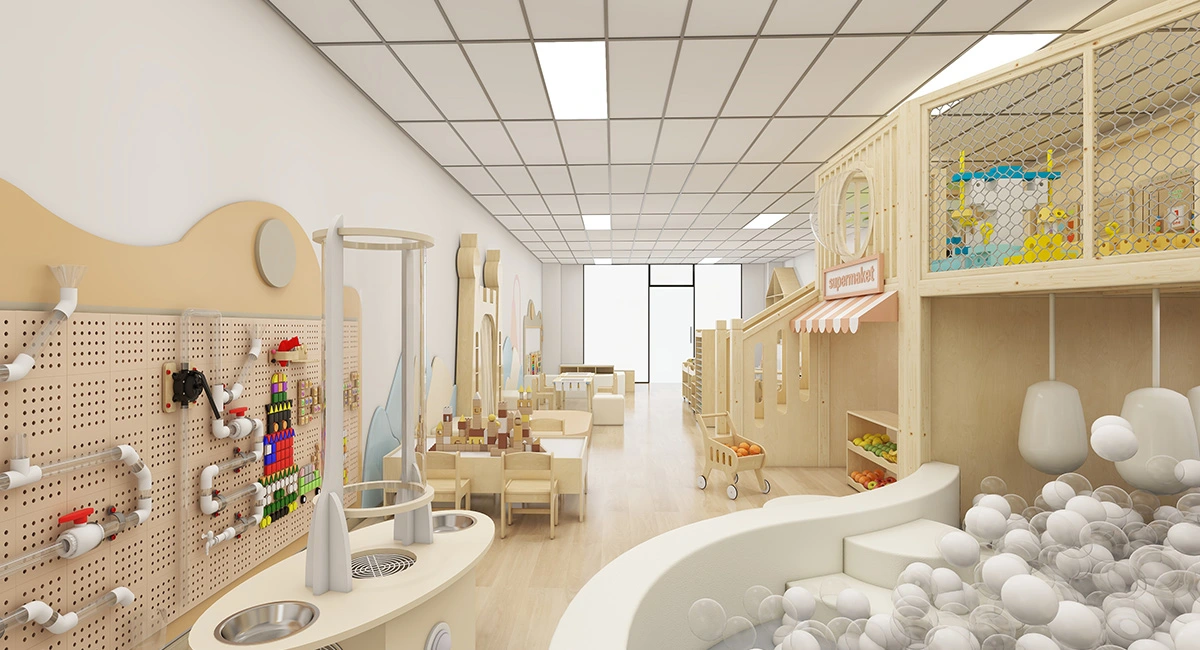
Sensory Exploration Area: Sand and water table, touchpad, light and shadow table.
Spatial Vision and Flow
Sight-clear design: Low cabinets in the play area are ≤90cm high; large play equipment panels have transparent sections, allowing teachers to see all corners at a glance (e.g., transparent acrylic panels).
Staggered Pathways: Slide exits should not point to other facilities; they can be on soft mats or in ball pits.
Running and building areas are separated by low, padded walls (50cm high).
Secluded Corners: Tents/reading bags for 1-2 people are provided at the edge of the play area for children to relax.
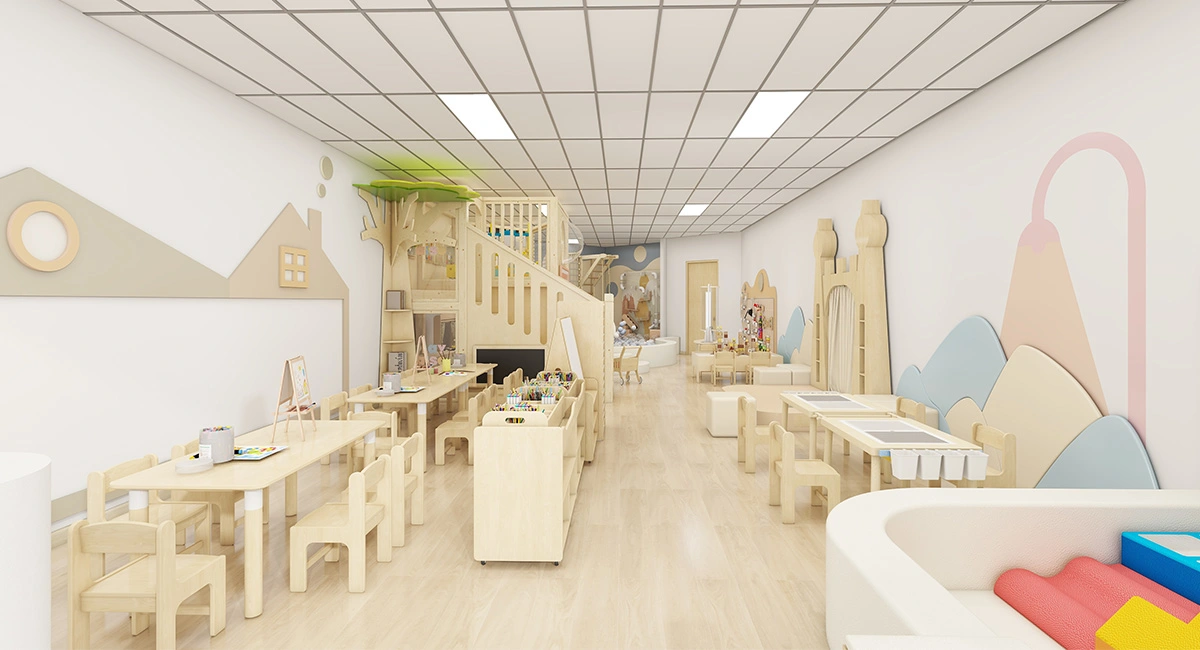
Educational: Implicit curriculum, environmental education
Signage System: Graphic symbols replace text (e.g., handwashing illustrations, trash can signs).
Process Display: Blank wall areas are used to display children's artwork, not fixed decorative paintings.
Play Equipment:
Double Rocking Horse: Requires synchronized effort to swing, naturally practicing coordination and communication.
Mini Supermarket (with price tags and a cash register): Engages in mathematical operations, social interaction, and understanding of social roles.
Sensory Table: An exploratory device containing various materials (e.g., sand, water, beans, rice grains), allowing children to explore the world through touch, sight, hearing, smell, and even taste.
Book Corner: Tiered bookshelves, allowing independent reading and challenges based on ability.
Incorporating these elements into your Kindergarten Interior Design helps create a space that is safe, engaging, and educational.