
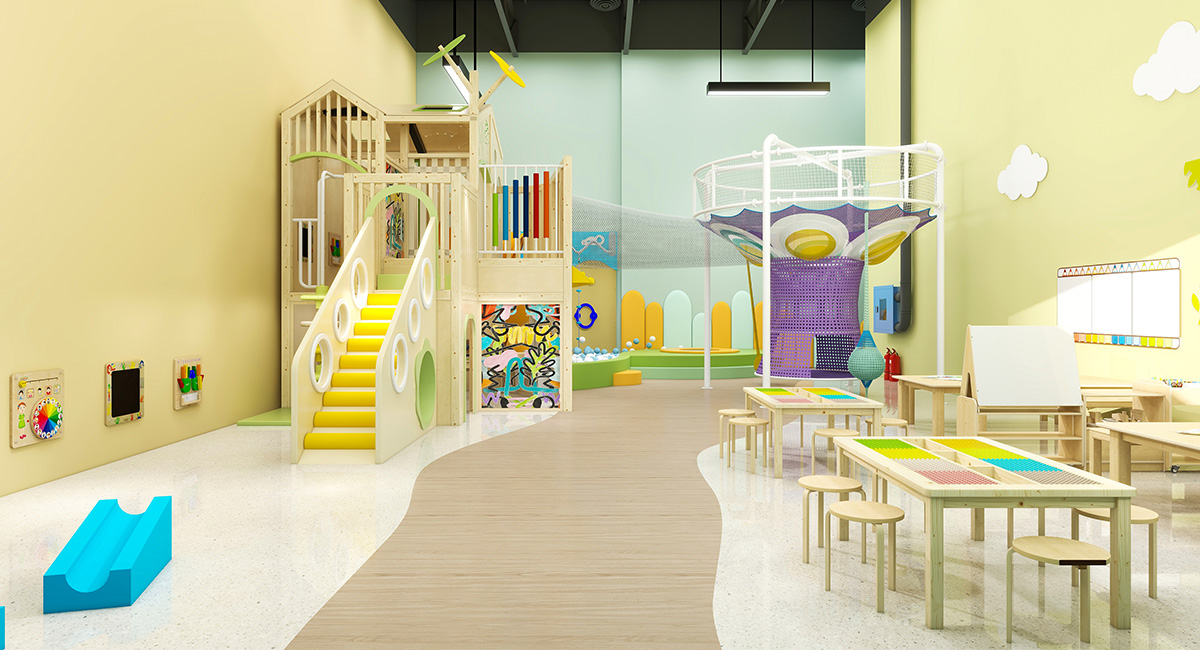
A good play structure should integrate different functional areas organically while strictly adhering to safety and design standards. Modern preschool activity room designs emphasize "separation of active and quiet areas" and "free flow", and preschool play equipment follows this principle, supporting children's diverse play behaviors through different functional areas.
Different Functional Area:
Large Motor Development Area
This area features low climbing frames, slides, toddler railings, steps, crawling tunnels, obstacles, and balance beams, serving as play structures for toddlers and a "physical training ground" for children. It primarily aims to exercise children's large muscle groups, such as climbing, crawling, sliding, drilling, jumping, and balancing, as well as their body coordination and control. It helps children expend energy and learn to control their own bodies.
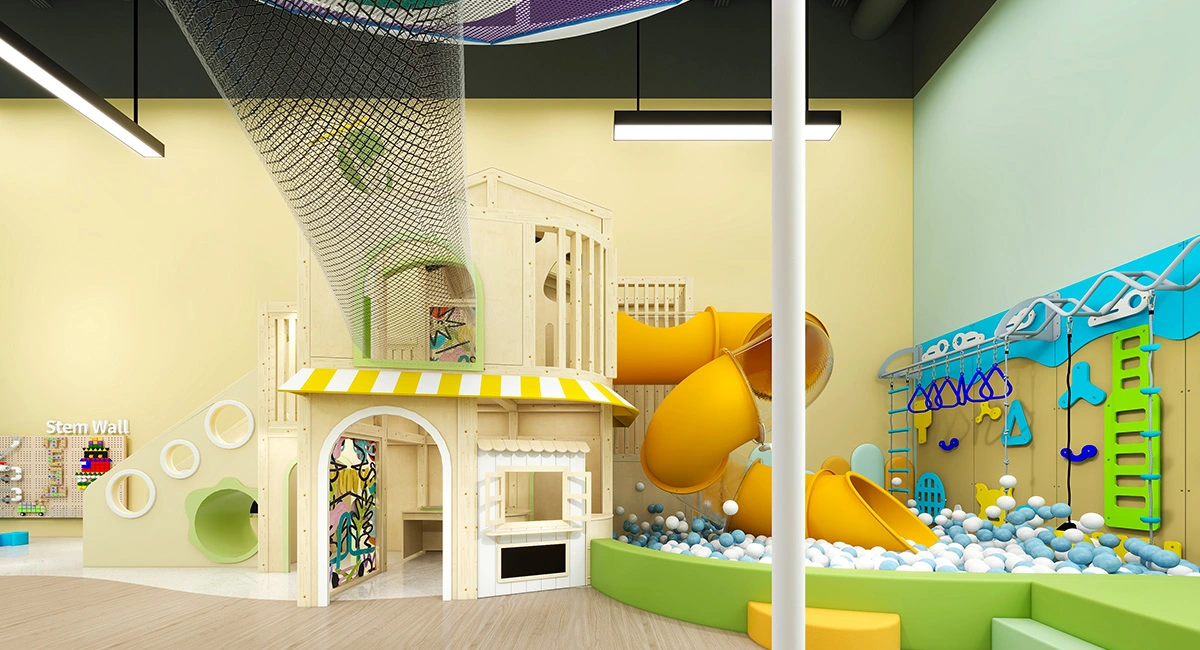
Role-playing and social areas
Feature children play equipment such as small kitchens, mini supermarkets, simulated clinics, fire stations, dressing racks, small hiding rooms, or arches, serving as the "social experience halls" for children. By imitating the adult world (such as homes, shops, and cafes), children engage in professional experiences and cooperative games, learning social rules, language communication, and problem-solving, and understanding how the world around them operates.
Construction and exploration area
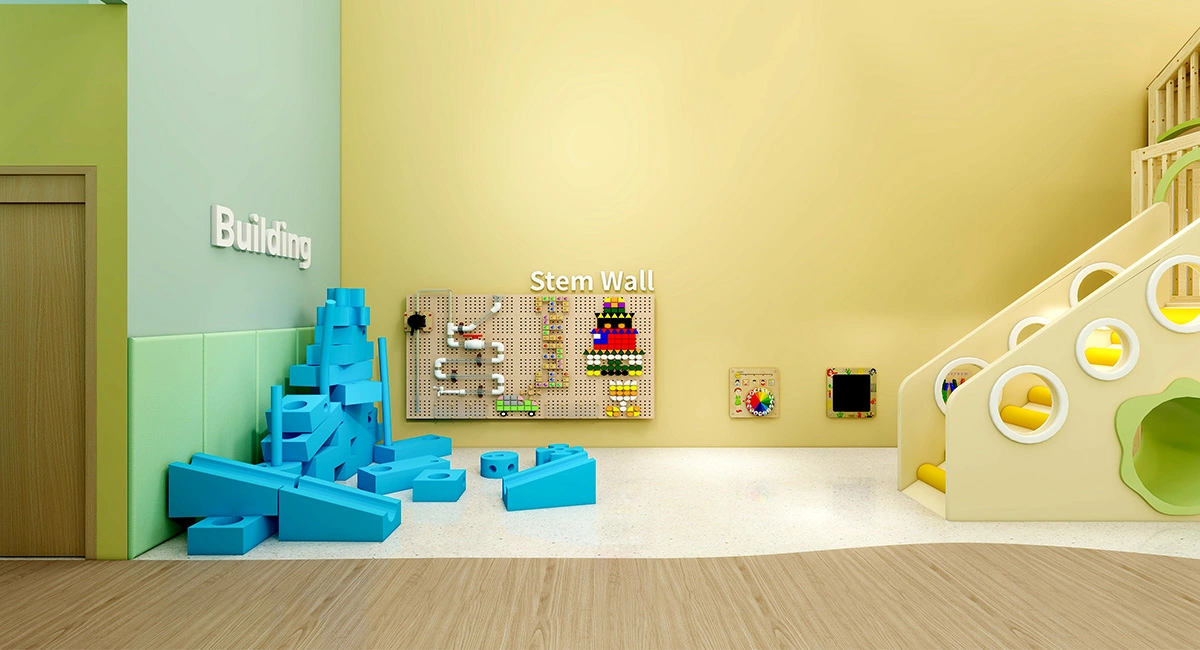
Various kids play structures are available, including building block platforms, large unit building blocks, small tabletop constructions, puzzles, a "Little World" game table that can be linked with the building block area, sand tables, and sensory game panels (such as gears and tracks). This is the "Little Engineer Workshop" for children. Through building, constructing, and exploring, children exercise their fine motor skills, spatial imagination, and creativity, and gain a preliminary understanding of cause-and-effect relationships and physical principles.
The cozy nook in the quiet and restful area
Adorned with soft carpets and cushions, low bookshelves, arched shelves, and sensory light boxes, serves as a "spiritual haven" for children. After exciting games, children need a safe and serene corner to be alone, rest, read, or observe others. This helps them calm down and gain a sense of security.
Developmental Appropriateness and Age Adaptation
The design of indoor play structures should align with the developmental stages of preschool children (typically aged 3-6). Their play begins to shift from parallel play to cooperative play, preferring more complex role-playing and construction. Therefore, the equipment should support cooperative play; for example, a building block table needs more space to allow several children to build together.
Challenge and safety balance
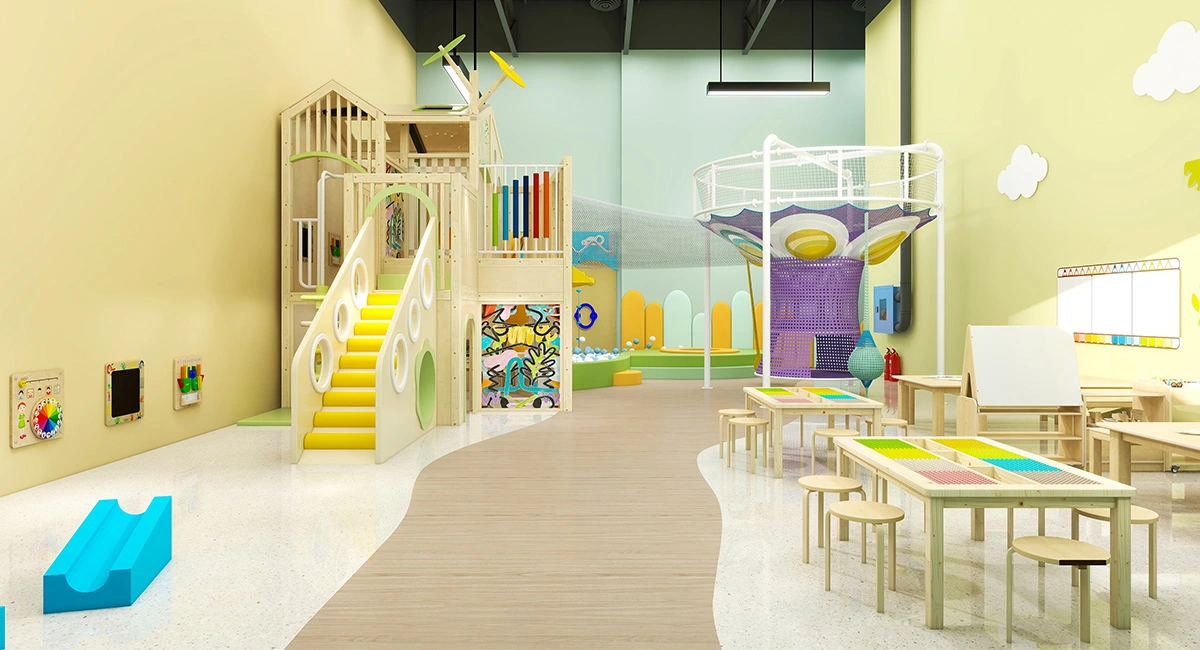
The difficulty of the game should be gradually increased. There should be low-difficulty activities suitable for beginners, as well as elements that provide moderate challenges for skilled children (such as slightly higher climbing), to promote their continuous development. However, challenges must not be at the expense of safety.
Inclusive design
Taking into account children with special educational needs (SEND), we provide activities of varying difficulty levels and types. For instance, we set up quieter, enclosed small spaces for them to retreat.
Integrating layout with environmental functions
Consider the interconnection between functional areas during design. For instance, placing the construction area adjacent to the play area can stimulate more imaginative play. A quiet reading corner should be situated away from the noisy, large-movement area.
Leave sufficient space
Adequate activity zones must be reserved between devices to prevent children from colliding with each other during play and to facilitate teachers' observation and movement. The central area should preferably be kept open.
Flooring materials
The floor beneath the game device must have sufficient cushioning and energy-absorbing materials, such as rubber mats, high-density foam mats, etc., to mitigate fall injuries.
In summary, designing and producing preschool play structures is a systematic project. It requires designers, producers, and educators to create spaces from the perspective of children, with an understanding of children's development, ultimately creating a place that can both stimulate potential and gently nurture childhood.